
Surviving Economic Uncertainty: Build a Gold Buffer with Auto Buys During the 2025 Shutdown Threat


Introduction
If your feed feels like a rerun of "breaking news," you're not imagining it. The federal shutdown has dragged on for weeks, freezing key economic data and injecting fresh uncertainty into everything from rate-cut odds to your portfolio mood. Markets hate not knowing, and the data vacuum is real—policy makers and investors alike are flying with fewer instruments than usual, which can make day-to-day moves feel jumpier than you'd prefer.
Here's the upside: when uncertainty swells, gold often steps into its safe-haven role. In October, spot gold punched through the $4,000/oz milestone and—even after a sharp bout of profit-taking—remains near historic highs, a reminder that shocks and policy fog tend to funnel attention toward resilient, globally trusted assets.
In this guide, we’ll translate the shutdown headlines into plain English, explain why gold demand is getting structural support (hello, central banks), and show you a calm, low-effort way to build a buffer: Auto-Buy. It’s the “set-and-forget” switch that steadily accumulates grams—especially helpful when every news alert wants a reaction. By the end, you’ll know how to ride out noisy weeks without doom-scrolling your net worth.
What a long shutdown actually does to markets (and your stress levels)
Here's the thing: shutdowns are unusual, but this one's turned into a grind. With Washington at an impasse, it's already into week four, and coverage across outlets confirms the stalemate and rising political cost. Beyond the optics, the data freeze—from jobs to inflation—complicates the Fed's read on the economy, creating a bigger "guessing gap" that can swing bond yields and equities. The Treasury has even warned the shutdown could shave about $15B a week from economic activity the longer it persists—real money with real second-order effects.
Relatable snapshots:
- You wake up to “Fed signal unclear” push alerts… again. Rate odds whipsaw, and your feed insists every tick is a turning point.
- Your budgeting app flags higher grocery and rideshare costs this month, while your 401(k) looks choppy.
- You just want a plan that doesn’t require timing three markets before breakfast.
Why gold is acting like a seatbelt right now
When macro uncertainty piles up, investors reach for assets with low counterparty risk and deep global liquidity. That's gold's lane. In early October, spot gold broke above $4,000/oz, then spiked past $4,300/oz as safe-haven flows and rate-cut bets intensified—before a classic bout of profit-taking cooled things off mid-month.
Two structural supports matter:
- Central-bank demand. The World Gold Council's latest update shows central banks resumed net buying in August—a steady drumbeat that underwrites long-term demand, even at elevated prices.
- Rates & the data vacuum. Markets still expect the Fed to cut this fall, but the shutdown-driven lack of official data lowers policymakers' confidence—another reason investors hedge with gold while the path is debated.
“Uncertainty is a feature, not a bug, of shutdowns. Auto-buying gold turns that noise into disciplined accumulation.”
Chart unavailable
“Okay, but what if I’m buying at the top?”
Real talk: nobody nails tops and bottoms consistently. Prices can sprint (like they did above $4,300) and then cool quickly (as they did after profit-taking). That's exactly why automation exists. Instead of trying to predict micro-moves, Auto-Buy spreads purchases over time. Think of it as dollar-cost averaging for grams—a steady cadence that reduces regret and smooths your cost basis.
How to make volatility your friend:
- Set a weekly Auto-Buy (e.g., $10–$50). When headlines spike, your habit doesn’t.
- Add “buy-the-dip” triggers for opportunistic top-ups on sharp down days.
- Let roundups do the background work. Coffee at $4.30? Round to $5 and send the $0.70 toward gold—barely noticeable, surprisingly powerful.
Relatable snapshots:
- You’re on the bus scrolling shutdown memes; Aure pings: “Auto-Buy completed: 0.012g.” Small, but it’s yours.
- After a red day in gold, your “buy-the-dip” rule quietly adds a few extra dollars.
- Two months in, you check your stack. It’s not flashy—but it’s real, titled allocation, not just a chart on your phone.
The case for a “Gold Buffer” during policy fog
A "buffer" is not an all-in bet; it's a slice of stability designed to absorb surprises. In a shutdown, even seasoned investors admit the data vacuum can amplify volatility across assets. Meanwhile, fund-flow data shows investors have been taking risk down and rotating—behavior that often coincides with increased hedging and safe-haven interest. Gold's appeal here isn't just price action; it's what it represents: neutral collateral with global demand, reinforced by ongoing central-bank buying.
Build your buffer in three steps:
- Pick your cadence. Weekly or bi-weekly Auto-Buy keeps the habit alive without decision fatigue.
- Layer micro-savings. Turn on roundups so everyday purchases push your stack forward with spare change.
- Use guardrails. Optional price-based top-ups on dips; optional monthly cap so you never over-commit.
Spot buys vs. set-and-forget (use both)
- Spot buying = your tactical lever. If gold sells off on a headline or a hot CPI print later this month, a quick spot buy captures that window.
- Auto-save = your baseline. It compounds your consistency, so missing a "perfect" moment doesn't derail the plan.
- Roundups = your stealth accelerator. You'll be surprised how fast nickels and dimes add grams.
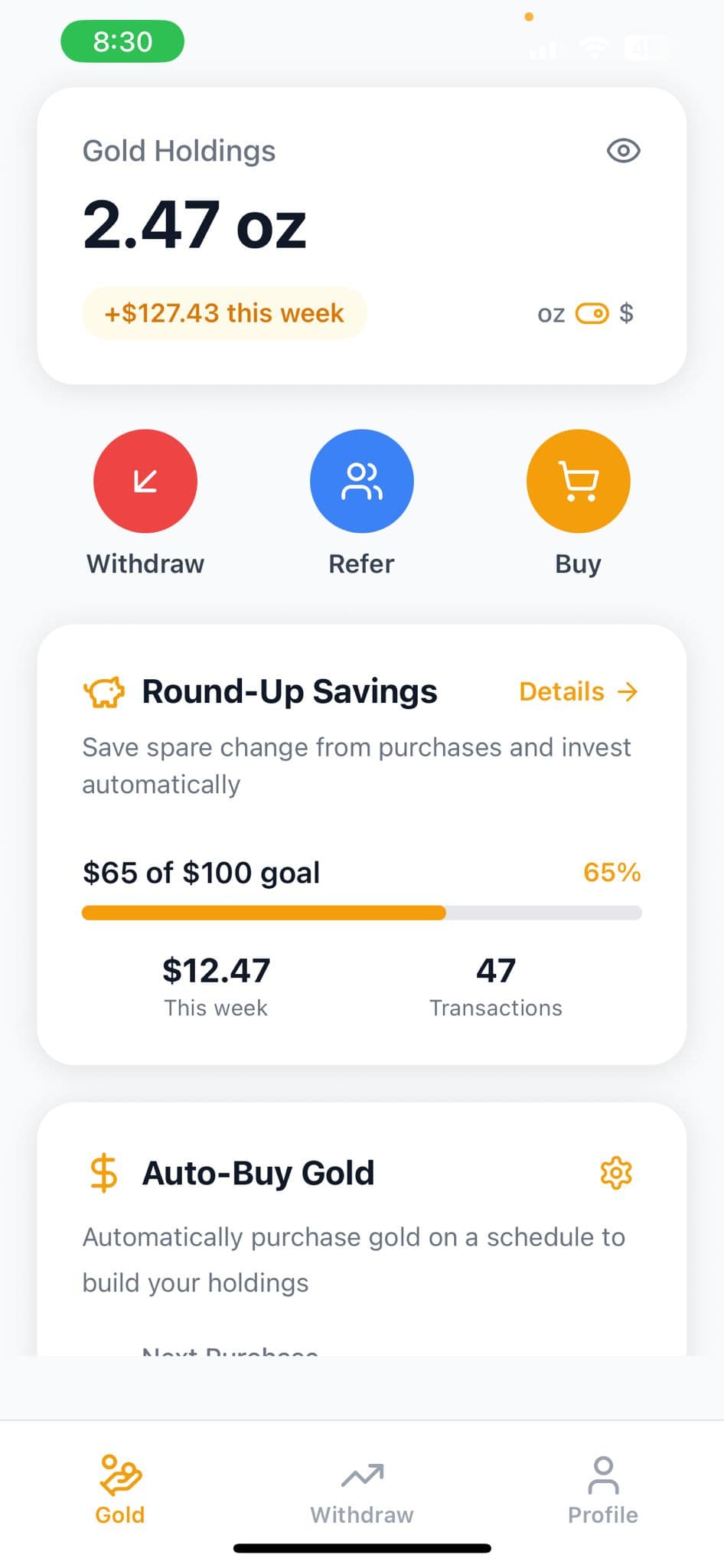
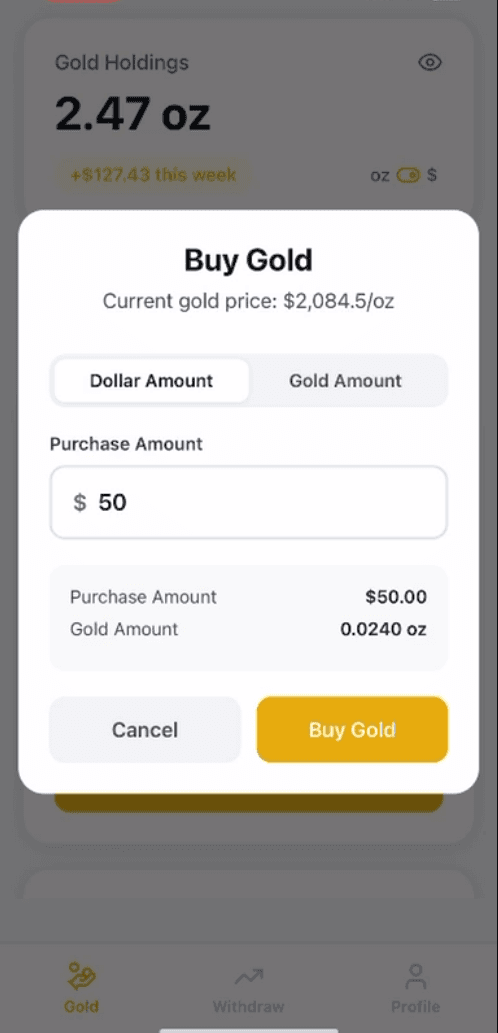
"Prices are high—shouldn't I wait?" Waiting can feel safe, but it's really a market call. With the shutdown still unresolved and rate-cut odds firming in a data vacuum, the path for volatility remains open. A rules-based plan that keeps stacking—small, steady, and occasionally opportunistic—beats trying to out-guess every headline. We're rolling out enhanced Auto-Buy, smart dip-rules, and roundups. Join the waitlist to lock in early access and turn the noise of 2025 into a habit you'll be proud of a year from now.
Conclusion
You don't control the shutdown, the data calendar, or the market mood. You do control your system. Auto-Buying gold during uncertain weeks lets you convert anxiety into action—grams, not just graphs—while the world argues about the next resolution vote. If the window narrows quickly, you're already in. If volatility throws a sale, your rules help you lean in without overthinking it.