
Does Gold Really Solve Hyperinflation?
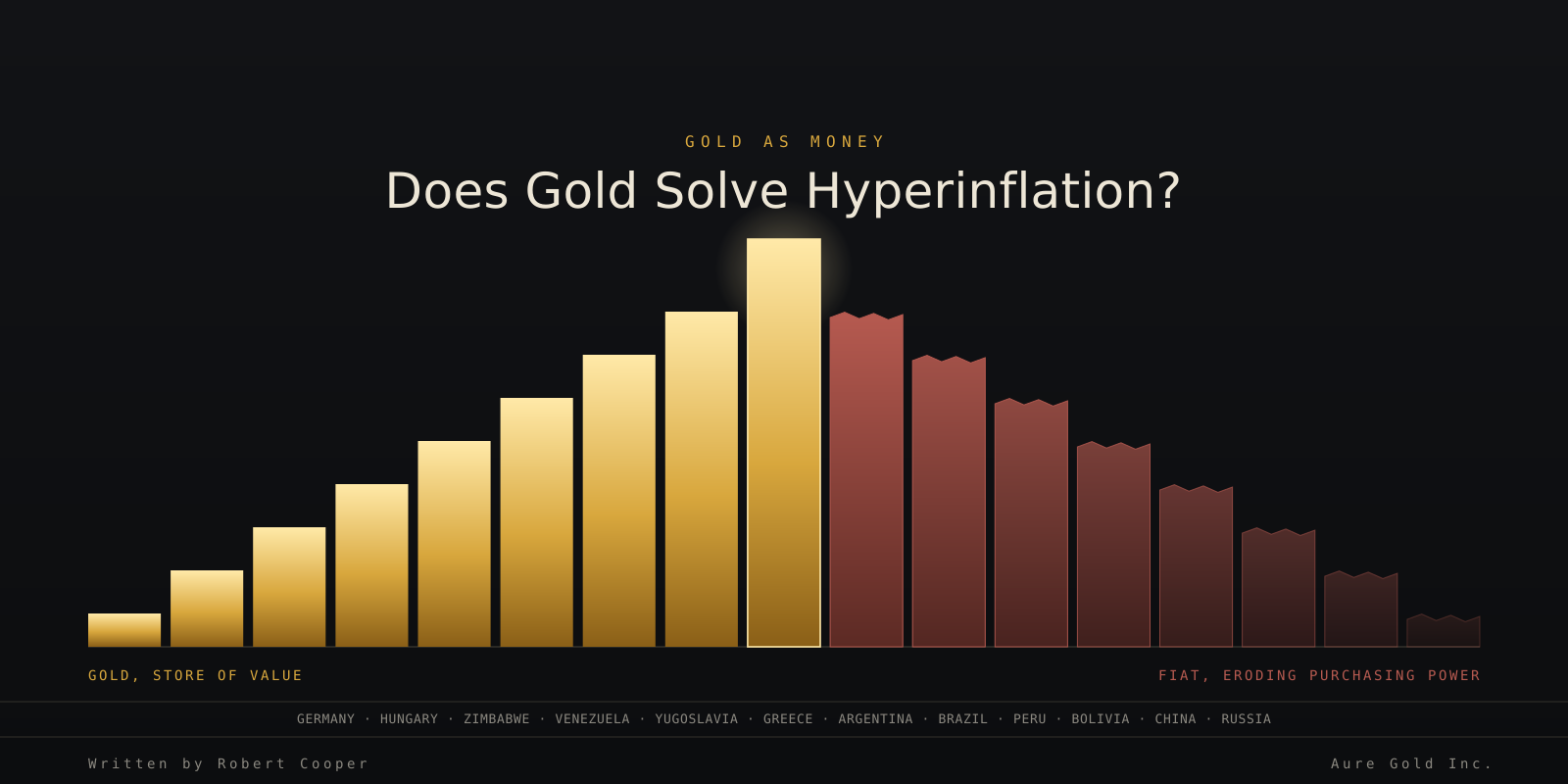

At Aure Gold, we make it our business to make gold more accessible. Whether it’s as a portion of your portfolio, a hedge against the unknown, or something you enjoy collecting, no one is questioning whether gold is a valuable commodity. For most of modern history, we’ve recognized it as a currency or store of value, but it hasn’t always stood alone. Copper, bronze, silver and many other metals have been used as financial instruments. That being said, most modern currencies have now been debased. These currencies rely on good faith, strong leadership and calculated fiscal policy to ensure too much money supply (or too little) doesn’t break down the entire system. In this blog, we explore the history of gold over the last 100 years and situations where gold alone fails to solve hyperinflation.
A Brief History of Gold as Currency in the last 100 years
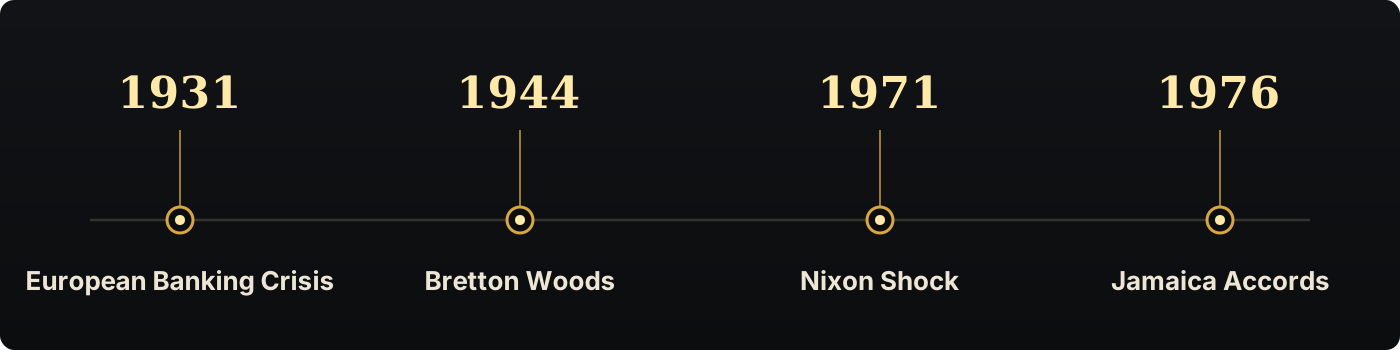
We’ll start in 1931 with a look at the European Banking Crisis. To give some context, the world was still recovering from World War I and the debts accrued as a result. Countries and banks struggled with trade imbalances, debt, and bank failures. It became increasingly difficult to maintain gold’s convertibility from standard currency. Within a single year, it seemed all the dominoes fell. One of the largest Austrian banks went under along with a couple German banks, Germany abandoned the gold standard, and there were several extensive losses within the U.S. financial system that contributed heavily to the Great Depression.
Now let’s fast forward to the year 1944. World War 2 officially surpassed the length of the first world war. In the midst of the chaos, the Allied nations were attempting to rebuild the international economic system. Delegates from 44 Allied nations gathered in Bretton woods, and, after nearly a month of discussion, signed the Bretton Woods agreement. This agreement standardized the “gold standard”, which formally leveraged the dollar for global trade. At this time, the US held most of the world’s gold supply and had a core infrastructure away from the active warzone, providing the highest level of stability for gold convertibility. This agreement was longstanding and positioned the dollar to be the most commonly used currency in global trade and foreign exchange markets.
For nearly 3 decades, this agreement was the backbone of international trade and allowed for efficient money markets through currencies pegged to the dollar (or at least the gold that the dollar represented). By 1971, there was major strain on the US gold reserves due to heavy spending on the war in Vietnam and foreign aid.The US flooded their dollars into many markets,which were then cashing out the dollars for gold. In an attempt to stop the bleeding, President Nixon issued an executive order that disallowed the direct conversion of dollars to gold. Not only did this end the Bretton Woods agreement, but it ended the gold standard for currency. Other currencies that were pegged to the dollar, like Pound Sterling, had to follow suit.
Ultimately, the final nail in the coffin was the Jamaica Accords in 1976, which paved the way for fiat currencies as we know them today.
When Gold Helps and When Gold Fails
Let's look at gold as a tool against hyperinflation. While unfortunate, we have seen hyperinflation play out in several economies over the last couple of decades. Cases like Zimbabwe or Venezuela have suffered from poor fiscal policies that led to a currency that was over printed and devalued. What would have happened if you were a citizen and owned gold prior to the downfall of these currencies? Would you have had access to enough liquidity in your local markets to be able to find a seller or buyer for the gold you owned? On paper, the gold would have maintained its value and conserved your purchasing power. The issues that accompany hyperinflation are usually also accompanied by infrastructure deterioration, which ultimately means you have a safe haven asset without many ways to leverage it as a true safety net.
The short answer, yes gold would have helped but, there would have been risks. Gold is a commodity at the end of the day and it often will fail for two reasons: market manipulation (up or down) or government intervention. Even if we look no further than the US markets, it was illegal to own gold privately from 1933 until 1974. In both the case of market manipulation or government intervention there is a common theme. “You can’t control everything”. There is inherent risk in everything that you do, even if it’s something simple like walking to the backyard. But that doesn’t mean that you can’t hedge your risks and do your best to be ready for an ever-changing world.
Conclusion
Gold had a great run as a backer of currencies. Who knows if we will ever revert to gold backed currencies? What we do know is that many banks are expanding their reserves, and at an individual level, when global uncertainty rises, people’s eyes shift to gold. This can be viewed as an indicator of future monetary policies, or simply just force of habit.
As for Aure, we feel it’s best to hold some amount of gold, and our goal is to make it accessible, whether you’re wanting to exit your current positions or enter new ones. It all circles around the idea of diversification. Gold gives you a hedge against currency and policy risk while owning other assets can give you productive investments to provide growth that gold won’t. Used together, each covers a gap that the other leaves open.
Looking to Add Gold To Your Portfolio?
If you are interested in owning gold rather than simply reading about it. We sell physical gold bars at affordable price points and also offer a digital gold product where we handle the logistics of storage for you. Browse available bars below, or check out all options here!