
Costco Gold Mania: Smart Deal or Shiny Distraction?

Introduction
You're standing in the middle of Costco, juggling a 36-pack of paper towels and debating whether you really need that third rotisserie chicken this month. Then you spot it—a glass case displaying gleaming gold bars next to the giant jars of cashews. Wait, gold bars? At the same place you buy bulk toilet paper?
Welcome to the weirdest gold rush of 2025. Costco has been moving an estimated $100 million to $200 million in gold bars monthly since launching this product in late 2023, and the bars sell out so fast they've become harder to snag than concert tickets. With gold hitting record highs around $4,200 per ounce in December 2025—up more than 59% from last year—everyone from your college roommate to your mom's book club is suddenly very interested in precious metals.
But here's the thing: just because something's shiny and selling out doesn't mean it's a smart buy. We're diving deep into the Costco gold phenomenon to break down the real all-in costs, the resale nightmare nobody talks about, and whether this is actually the flex your portfolio needs—or just expensive FOMO wrapped in Swiss packaging.
The Costco Gold Playbook: What You're Actually Buying
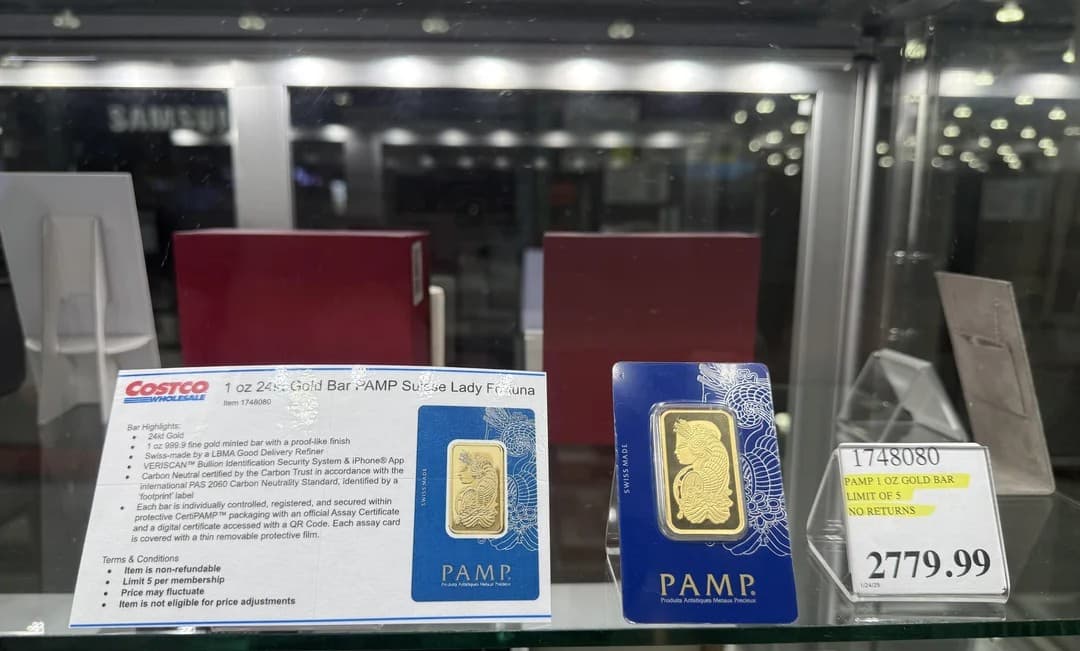
Let's start with what Costco is selling. The warehouse giant primarily offers 1-ounce, 24-karat gold bars from reputable mints like PAMP Suisse (the Lady Fortuna bar) and Rand Refinery. These aren't sketchy back-alley gold—they're LBMA-certified, come with assay cards or digital certificates, and are about as legit as physical gold gets.
The appeal? Costco marks up its gold by roughly 2% over spot price, which sounds competitive. When spot gold was trading around $2,472 in August 2024, a bar at Costco cost about $2,679—an 8% premium. Compare that to some dealers who charge 10% or more, and Costco looks like a deal.
But wait. You need a Costco membership ($60 for basic, $130 for Executive). If you're buying gold bars specifically to buy gold, that membership fee is part of your cost basis. And if you're using an Executive membership to snag that sweet 2% cash back? You're paying $130 upfront for potentially $53 back on a $2,679 purchase. Stack a Costco credit card (another 2%), and you could get 4% back total—about $107 on that same bar.
Here's the catch: Costco has tightened purchase limits. As of May 2025, you can buy a maximum of two 1-ounce bars per transaction, and you're limited to one transaction every 24 hours. The bars also sell out within hours of being listed online, making this less "convenient investing" and more "refresh the website obsessively at 3am."
The Hidden Costs Nobody Mentions
Alright, let's talk about the stuff Costco's not advertising on those in-store signs.
Storage and Security
You just spent $2,679 on a piece of metal smaller than a credit card. Where exactly are you putting it? Under your mattress? In a sock drawer? A safe deposit box at your bank will run you $50-$200 per year. A home safe sturdy enough to actually deter thieves? That's $500-$2,000 depending on the model. And don't forget insurance—if your homeowners or renters policy doesn't explicitly cover bullion (many don't), you'll need a rider that could cost another $50-$100 annually.
Do the math: if you're paying $150/year in storage and insurance costs, that's $1,500 over 10 years. On a $2,679 investment, that's a 56% drag on your principal before you even factor in price appreciation.
The Resale Reality Check
Here's where things get messy. Costco doesn't buy back its gold bars, and their return policy explicitly excludes precious metals. So when you decide to cash out, you're on your own.
Most gold dealers will pay you 5-10% below spot price, according to certified financial planner Jon Ulin. Brick-and-mortar shops might offer better rates—the Wall Street Journal found some NYC dealers paying 1-5% below spot—but that's still a haircut. And if you try selling on eBay or Facebook Marketplace? Good luck not getting scammed or severely lowballed.
Let's run a real scenario. Say you bought a bar in September 2024 for $2,679 when spot gold was around $2,472. Fast-forward to December 2025, and spot gold is hovering around $4,200. You're sitting on a theoretical gain of $1,521, right?
Wrong. Sell to a dealer at 7% below spot, and you're getting about $3,906. Subtract your original $2,679, and your actual gain is $1,227. Not bad—until Uncle Sam shows up.
The Tax Trap That'll Make You Cry
Here's the plot twist that catches most first-time gold buyers: the IRS classifies physical gold as a collectible, not an investment asset. That means if you hold for more than a year, your gains are taxed at up to 28%—not the preferential 15-20% long-term capital gains rate you'd get on stocks.
Hold for less than a year? It's taxed as ordinary income, which could push you into an even higher bracket. And depending on your income, you might also owe an additional 3.8% Net Investment Income Tax on top of that.
Back to our example: that $1,227 gain? At a 28% federal rate, you owe $343. Live in California or New York? Tack on state income taxes that could push your total tax bill past 40%. Suddenly that "great deal" on Costco gold is looking a lot less shiny.
Oh, and some states charge sales tax on gold purchases at the point of sale. Always check your state's rules before you buy.
Why Gold Is Actually Rallying (And Why That Matters)
So why is everyone suddenly obsessed with gold? It's not just TikTok FOMO—though that's definitely part of it.
Gold has surged over 59% since December 2024, driven by a perfect storm of economic anxiety. We're talking persistent inflation above the Fed's 2% target, geopolitical tensions (Ukraine, Middle East, U.S.-China trade disputes), and growing concerns about U.S. debt levels. When traditional markets feel sketchy, investors flee to "safe haven" assets like gold.
Here's what's really juicing prices: central banks have been gobbling up gold at record rates, especially in China and Russia. When big institutional buyers are loading up, retail investors take notice.
Goldman Sachs predicts gold could hit $4,900 by end of 2026, while JPMorgan sees $4,000+ by mid-2026. But remember: analysts also predicted the stock market would crash in 2020, and instead it went on a tear. Predictions aren't guarantees.
The Costco Gold Buyer Checklist: Red Flags vs. Green Lights
You might actually benefit from Costco gold if:
- You already have a maxed-out Costco Executive membership and use it regularly
- You have secure storage already set up (safe, insurance, etc.)
- You're treating this as 5-10% of a diversified portfolio, not your entire investing strategy
- You understand you're buying and holding for years, not flipping in six months
- You have a clear exit plan and know where you'll sell when the time comes
- You're in a low-tax state (or no state income tax) and a lower federal bracket
- You genuinely want physical gold as an inflation hedge, not just because it's trendy
Run away if:
- You're buying your first gold "because everyone else is"
- You can't afford to tie up $2,500-$4,000 for multiple years
- You have credit card debt or no emergency fund
- You think you'll flip it in a few months for quick profits
- You have nowhere secure to store it
- You're counting on 40%+ annual returns like we saw in 2024-2025
- You're in a high tax bracket and will get demolished by collectibles tax rates
What Smart Investors Are Doing Instead
Here's the real talk: if you want gold exposure, physical bars from Costco probably aren't your best option unless you're already a precious metals enthusiast with the infrastructure to handle them.
Better alternatives for most people:
Gold ETFs: Funds like GLD or IAU track gold prices but trade like stocks. You get the same price exposure without storage hassles, and they're taxed at standard long-term capital gains rates (15-20% max) instead of the punishing 28% collectibles rate. Plus, you can buy and sell instantly during market hours.
Gold mining stocks: Companies like Barrick Gold or Freeport-McMoRan give you leveraged exposure to gold prices—when gold goes up, mining stocks often go up more. Higher risk, higher potential reward, and again, better tax treatment.
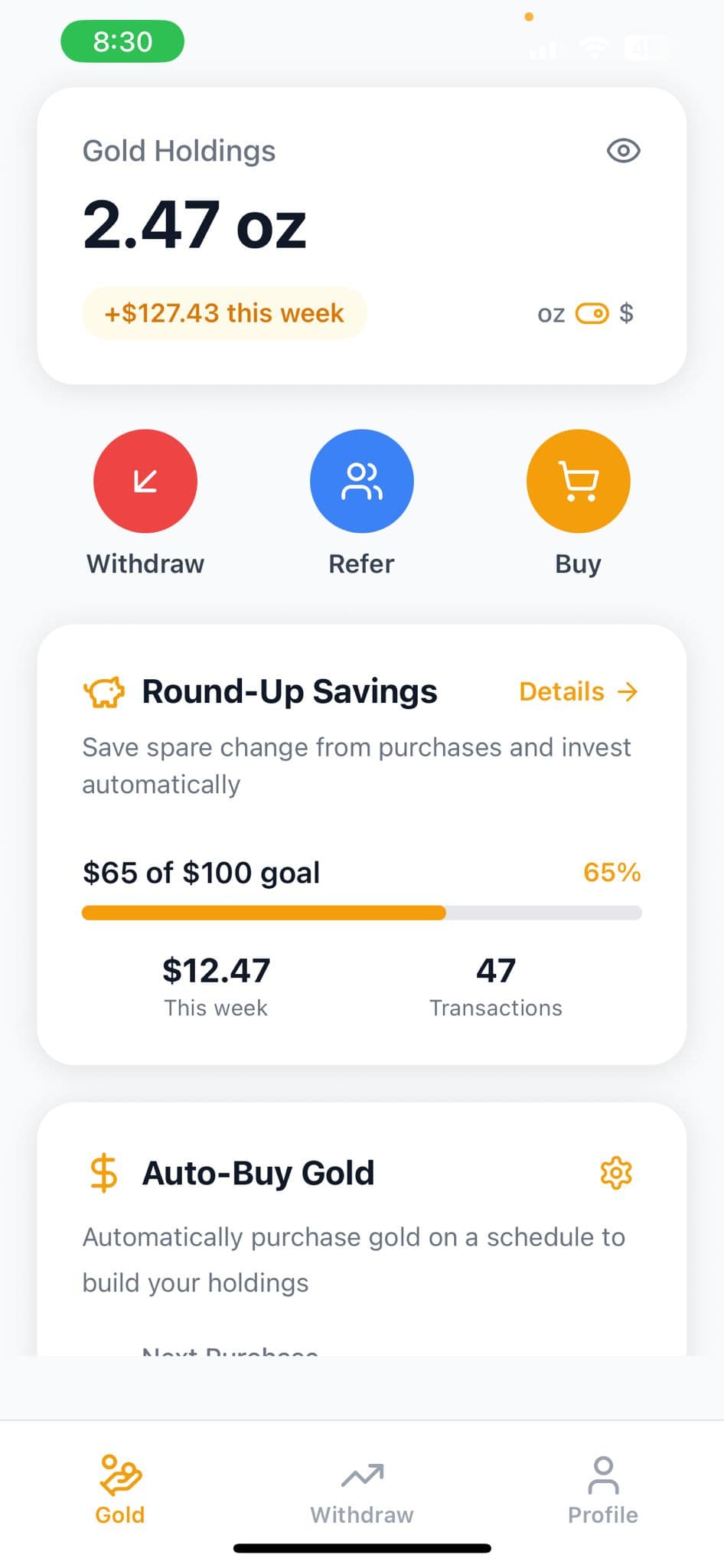
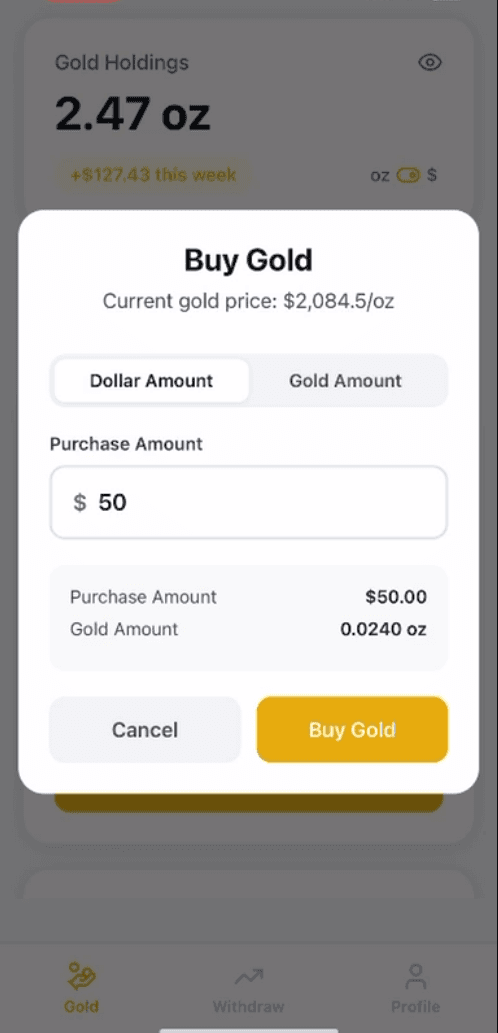
Digital gold platforms: Apps that let you buy fractional gold with instant liquidity. You're not holding physical metal, but you're also not paying for a safe or worrying about getting robbed.
And if you really want that "I own physical gold" flex? There are specialized dealers with transparent buyback policies, better selection, and often comparable or better pricing than Costco—without the purchase limits and sellout drama.
The Bottom Line: Calculate Your Real All-In Cost
Costco gold isn't a scam, but it's not the no-brainer deal it appears to be at first glance.
When you factor in membership fees, storage, insurance, dealer spreads on resale, and those brutal collectibles tax rates, your "2% premium over spot" can easily turn into a 15-20% drag on returns. A $2,679 bar that appreciates to $4,000 in market value might only net you $2,800 after all costs and taxes—a gain of just $121, or 4.5%.
That's not terrible, but it's a far cry from the 49% gain you'd see if you just looked at spot prices.
Our take: If you're dead-set on physical gold, use our calculator (coming soon) to model your specific scenario. Input your tax bracket, state, storage costs, and expected holding period to see what you'd actually walk away with. Because the last thing you want is to discover you paid $4,000 for a bar that nets you $3,200 after you account for everything.
Gold can absolutely play a role in a smart portfolio—but only if you go in with eyes wide open about the real costs. And honestly? For most Gen Z and Millennials, there are better ways to hedge against inflation and build wealth that don't involve refreshing Costco's website at 2am.
Want Gold Exposure Without the Headaches?
That's exactly why we built Aure. Instead of dropping thousands on a single bar you can't easily sell, you can buy spot gold starting from $1, build your holdings automatically through everyday purchases (yes, that coffee counts), and actually use your gold when you need it—with none of the storage, security, or resale drama.
We're launching early access soon, and we're giving our waitlist members first crack at exclusive features that make gold investing effortless, not stressful.
Join the waitlist and we'll show you how to build a gold position the smart way—without the Costco membership, without the safe in your closet, and without the tax nightmares.