
Central Banks Are Hoarding Gold – Should You? Easy Ways to Start with App-Based Savings


Introduction
Gold just ripped to fresh records above $4,300/oz as investors braced for rate cuts and another round of global jitters—yet central banks are still buying, not selling. That’s a big signal. Think about it: the institutions tasked with safeguarding national balance sheets are leaning into gold even at all-time highs, citing diversification and long-run stability, per the World Gold Council and recent market coverage from Reuters – Rates and MarketWatch. If you’re staring at the chart thinking “Did I miss it?”, you’re not alone. Money’s tight, timing feels impossible, and the headlines swing from “soft landing” to “new risk” by the hour.
Here's the thing: you don't need a vault or perfect timing to participate. With spot buys for "buy-the-dip" moments, micro-savings that round up spare change, and auto-save that hums in the background, you can build a habit instead of betting on a single entry price. In this guide, we'll translate the central-bank signal into an everyday playbook—how to start small, stick with it, and avoid avoidable mistakes—so you can stack grams, not stress.
The Signal Behind the Headlines: Why “They’re Buying” Matters (and What to Do if You Feel Late)
Central banks added ~19 tonnes in August and have amassed ~444 tonnes year-to-date as of late summer—steady accumulation despite record prices, per the World Gold Council and corroborating data coverage from [Nasdaq – Central Banks]. That activity spans emerging and developed markets: Poland was a standout buyer; India's gold reserve value just topped $100 billion as prices surged, underlining how reserve managers treat gold as a durable hedge and a portfolio anchor, per Reuters – Central Banks and the World Gold Council's quarterly trends.
Why now? A few drivers keep showing up in the data and outlooks:
- Interest-rate inflection: Markets are pricing cuts and a slower growth path into 2026, a backdrop that historically supports non-yielding assets, per Reuters – Rates and the latest IMF World Economic Outlook.
- Policy and geopolitics: Trade tensions and conflict reroutes have whipsawed shipping and energy costs, feeding volatility that nudges institutions toward gold, per Reuters – Freight.
- Inflation watch: Headline inflation is easing globally but remains uneven; with key data releases still moving markets, gold keeps its "insurance" bid, per IMF and release timing from the BLS.
- Portfolio diversification: Three consecutive years of 1,000t-plus official-sector buying capped a broader demand upswing that included ETF inflows, per the World Gold Council's mid-year data.
“When the largest, slowest-moving investors keep adding at records, that’s a message about resilience—not just price.”
What this means for you (in plain English):
- You don’t need perfect timing; consistency beats precision when policy and geopolitics are the main drivers.
- Small, frequent buys can mirror “institutional discipline” without institutional budgets.
- Vol spikes? Use spot ‘buy-the-dip’ nudges for entries when the tape wobbles.
- Treat gold as a long-term slice, not a lottery ticket.
Your Actionable Angle: A Simple Habit Loop (Spot + Micro + Auto)
Let’s make central-bank discipline practical for a normal budget. Here’s a habit loop that blends spot buying, micro-savings, and auto-save—no heroics required.
Step-by-step habit plan
- Set a baseline auto-save (e.g., $10–$25/week). That’s “set-and-forget” exposure you won’t overthink.
- Turn on micro-saves (roundups). Your coffee and rideshares quietly tip pennies into gold—effortless habit formation.
- Add a spot-buy rule: When gold dips 1–2% in a day (or hits your price alert), make a small, pre-capped purchase. Think of it as buying volatility, not chasing headlines.
- Calendar the catalysts: FOMC decisions, CPI releases, and major geopolitical summits can jolt prices. Keep your auto-save steady; use spot buys only when the move is meaningful. (CPI timing: see BLS; rates backdrop: Reuters – Rates.)
- Quarterly tune-up: If life gets expensive, reduce—not remove—your auto-save. Discipline matters most when budgets are tight.
How to size buys (without anxiety)
- Anchor to income: 0.5–1.0% of monthly take-home pay into auto-save is a reasonable starter; micro-saves do the rest.
- Cap your spot buys: e.g., no more than 2–3x your weekly auto-save per dip. That keeps you from “revenge buying” after a spike.
- Think in grams, not ounces: Fractional ownership means you can be precise and steady.
Common mistakes to avoid (and what to do instead)
- All-in at records: Price made headlines for a reason; build a ladder over weeks so one print doesn't define your outcome. Coverage from MarketWatch and Reuters – Rates shows how fast momentum can swing intraday.
- Ignoring macro calendars: Don't let CPI/Fed days surprise you—keep your auto-save running, reserve spot buys for outsized moves. (BLS, Reuters – Rates)
- Confusing exposure with ownership: ETFs are convenient, but they're market exposure, not allocated metal with clear title. If "owning your slice" matters, prioritize allocated purchases and read the fine print. See the World Gold Council's demand/ETF commentary for context.
Relatable scenarios to keep you motivated
- Rent week realism: Money’s tight? Let auto-save run at a smaller amount rather than pausing entirely.
- Commute notification: Price dips 1.5% during your lunch break; your pre-set rule triggers a tiny spot buy. Done.
- Weekend reset: Your card roundups fund a surprise mini-buy Sunday night—no extra effort from you.
Chart unavailable
“But Isn’t Gold Already Expensive?” (Objections, Risks, and Perspective)
Fair question. Prices did lurch to records this week before a quick pullback—classic behavior when policy and geopolitics drive flows, per MarketWatch and Reuters – Rates. Short-term air pockets happen; long-term casework is about positioning, not prediction. Here's a balanced view:
- Yes, records invite reversals. That’s why we lean on a baseline auto-save + occasional spot add-ons, instead of swinging for fences.
- Policy cuts can change the math. Lower real yields historically ease the opportunity cost of holding gold; that doesn't guarantee returns, but it improves the carry comparison, per IMF and Reuters – Rates.
- Risks remain: Volatility, liquidity around data prints, and potential changes in official-sector behavior (if some banks pause). Keep allocations modest within your broader plan.
Real talk: If the idea of buying at highs makes your stomach flip, you’re describing most investors—and the cure is structure. A small, durable rule set beats white-knuckle guessing.
Conclusion
If central banks are the slow, sober money—and they're still adding—your takeaway isn't "go big at records," it's "go steady with rules." A tiny weekly auto-save, pennies from roundups, and an occasional spot buy on dips can turn good intentions into grams that actually accumulate. Windows open and close fast when rates and geopolitics set the tone, per Reuters – Rates; the edge for everyday investors is process, not prediction.
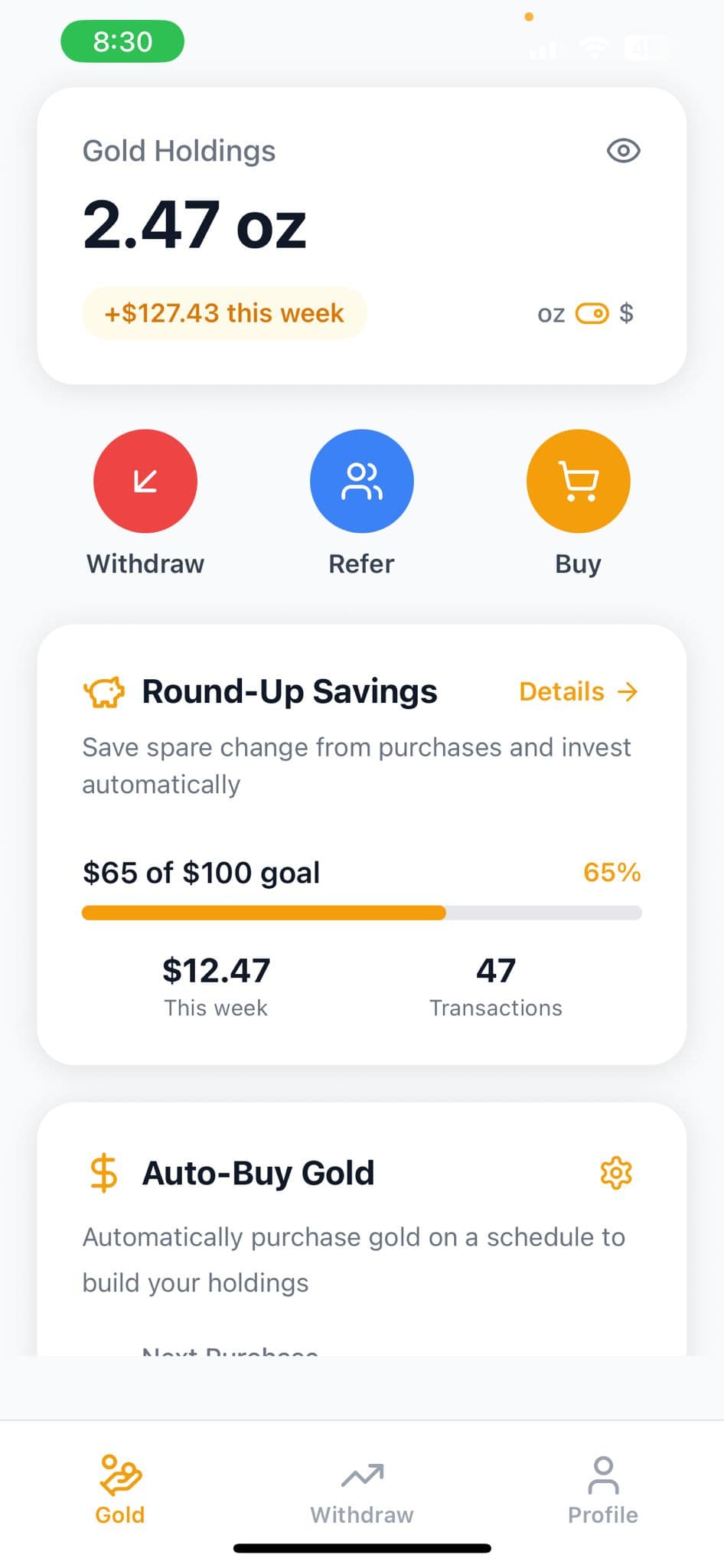
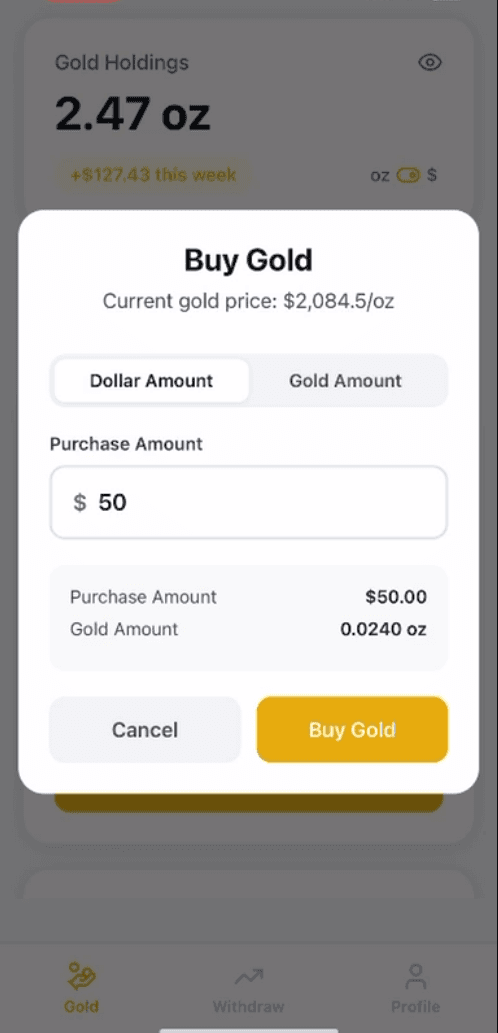
We're rolling out features to make this easier—smarter price alerts, cleaner auto-save flows, and clearer ownership options—so early users can build a habit before the next headline. If you want first dibs (and a few surprise boosts), join the waitlist and start stacking from where you are.